Bananaphoner

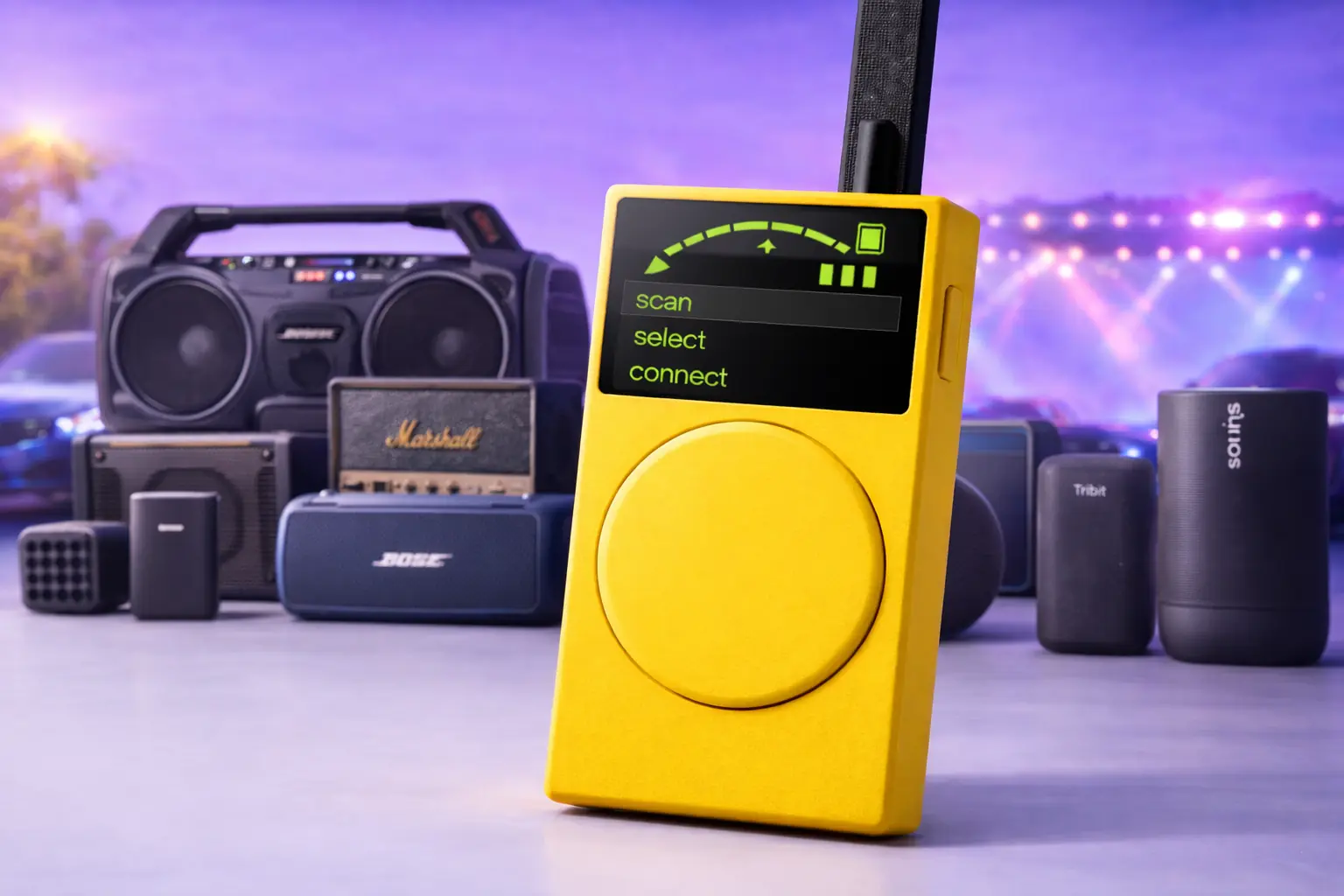
Bananaphoner
Bluetooth Security Tester: Raffi Protocol
Four guys, three trucks, a pop-up canopy, and a JBL speaker the size of a small cooler. Eastern Sierras, night three, dubstep until 4:00 a.m. The music stopped when the phone died.
I lay there in the dark: what kind of speaker was that, and is it still paired to anything?
It was not.
At 6:00 a.m. their speaker blared my version of Reveille: Raffi’s Bananaphone. Bright and ridiculous, max volume, the earworm cutting clean through the pines and the nylon tents of four hungover guys.
They laughed. Pumped their fists. Brought over a beer. “That was awesome.”
That moment became this device.
Most consumer electronics are built to reconnect fast and stay friendly. That design choice shows up as behavior. Devices advertise themselves constantly and accept new connections with very little friction — which, same, but that’s a different project. If you know what to listen for, the air around you is full of devices asking to be talked to.
The Bananaphoner listens for them. Then it helps itself to the audio path.
Inside: two ESP32 modules. One scans for Bluetooth traffic and identifies speakers. The other handles interaction. The main board hears everything equally; the external paddle antenna has more reach and a slight directional bias. That mismatch turns into a horizontal meter on the screen drifting left or right toward the signal. Closer to a metal detector than a dashboard.
The schematic and firmware were designed with AI. I knew what I needed the device to do. AI knew how the components should actually do it.
FCC Part 15 compliant. Tight power budget. Range in the tens of meters. The device cycles through standard connection patterns until a path opens, routes the audio, and plays back whatever file is on the device. The speaker treats it like any other source.
Point, select, ring ring ring ring ring ring ring, Bananaphone.